January 16, 2018

Baptism Records

Baptism of my Grandfather Benjamin Apodaca

Baptism of Hesiquio Lucero
Great-Grandfather


August 11, 2017

Pino Altos Photos

My dad Ben (on left) Uncle Rueben and Uncle Abe

Road that takes you into Pinos Altos

My dad(far left) his uncles. Felix Apodaca Contreras, 
Manuel Morales, and Manuel Contreras
My dad use to tell me how his uncles would come down to visit
 his family in Pinos Altos


Home where my dad was raised


My dad's home
(Present Day) Ice Cream Parlor


Picture taken in Silver City, New Mexico
Dad was on vacation with his brothers while visiting
Pinos Altos. They stopped in to have a cold beer.


Uncle Rueben, Diane, and Uncle Abe

Taken in 1996 Dad visiting Pinos Altos 
Rueben, Sara, and my father Ben


Cousin Diane Apodaca, and my aunties, AnaLiese and Gloria

January 11, 2017

Memories of Fierro and Pinos Altos, New Mexico


Three young men from Fierro.
From left, Felix Contreras (my great-uncle), Felix Jaramillo, and Manuel Zuniga.
Taken in
Goldroad, AZ about 1940


Circa 1942

My Dads uncles visiting him, I remember
my dad would tell me how his Contreras uncles and
cousins would come to visit him and my grandparents 
in Pinos Altos. My dad was always excited when they 
came to visit the family.
My dad Ben is on to the left, his ulncle Felix Contreras, 
his cousins Rosa's Contreras husband, Manuel Morales,
and cousin Raymond Contreras.


August 23, 2016

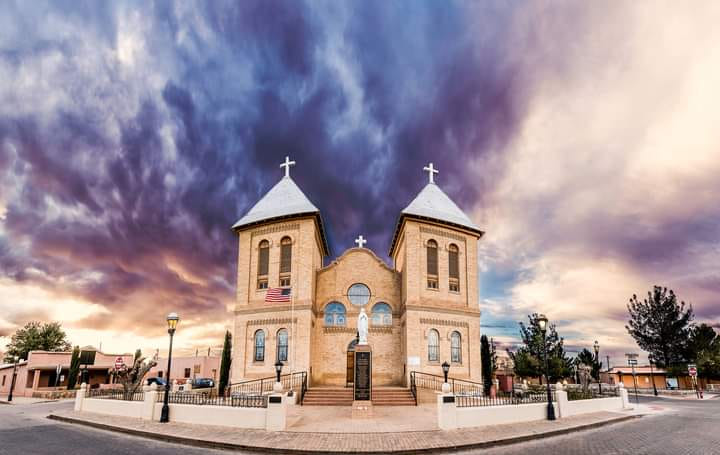
San Albino Church, La Mesilla, New Mexico


San  Albino Catholic Church
Old Mesilla
1855-1857


San Albin Catholic Church

Plaza in 1900, the first San Albino, La Mesilla, New Mexico
Can be seen in the distance of san Albino Church


San Albino Catholic Church
La Mesilla, New Mexico
(Present Day)


San Albino Cemetery
La Mesilla, New Mexico


August 22, 2016

June 3, 2016

Military Men

My Father

On December 19, 1945 Benjamin L. Apodaca was aboard the USS Henry R. Kenyon (DE 683) was a destroyer escort of the United States Navy in World War II. With the Battle of the Atlantic won, the destroyer escort proceeded on 15 May from Norfolk, Virginia through the Panama Canal and into the western Pacific theater. Arriving off Leyte on 7 July, she spent the remainder of the war escorting ships in the Philippines and to New Guina and Okinawa. After the surrender of Japan in August, Henry R. Kenyon continued to operate in the Philippines and off the coast of Japan until departing Manila for the United States on 26 November.
Naval receiving station, San Diego, California. He entered his Naval service on October 4, 1945 and was released with an Honorable Discharged from the Navy on October 23, 1950. He was appointed Second Class, USNR in the US Navy and received the World War II Victory medal.


On October 24, 1950 he was conscripted into the U.S.Army 40th Infantry Division and served a tour of combat duty during the Korean War. My dad was a Sergeant, and his job title was, specializing in demolition. While clearing an enemy mine field, his fellow comrade in arms fell wounded.  He and another soldier risk their lives by carrying out their wounded friend, while in the midst of enemy fire. For his act of heroism, he was awarded the United States Bronze Medal.

 Daniel Apodaca
(My Uncle)


Daniel L. Apodaca
Sgt. US Army
Korea
 Training @
6th Infantry Division M Company
Feb, 1952 to Apr 1952
 63rd Infantry Regiment
Fortord, California

Manuel L Rodriguez
US Navy 1945
(1st. cousin to my dad Ben)

Ray Contreras
(1st. cousin to my dad Ben Apodaca)


May 10, 2016

Hanover, Fierro,Pinos Altos

Fierro

Fierro
 
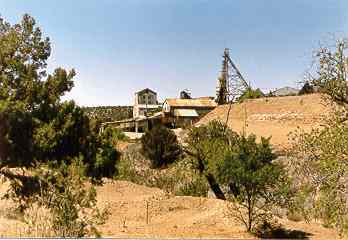
Hanover's mine produced zinc. The remaining mine structure was built during the first world war. Fierro is spanish for iron and that was what the mine there produced. Peak production was between the time of World War I and the 1930's.
Hanover
 

Hanover
 

Pinos Altos

The town never reached the status of being a "boom town" despite a population of 9,000 in the 1880s and 90s. Pinos Altos or tall pines in Spanish would not be an appropriate name for the town today for all the tall pines, ground cover and clear water streams are gone, denuded by prospectors and miners during the period from 1860 to the turn of the century. The town originally was named Birchville after one of three prospectors whose last name was Birch that discovered a few nuggets when sifting the gravel in a creek bed in 1860. As the town began to grow, Apache Indians beset it with frequent raids. It was during this period the settlers exhibited treachery of the worst sort. When a partially successful treaty had been established resulting in a certain amount of confidence on the part of the Indians, they were invited to attend a dinner to celebrate the signing of the treaty. Some sixty responded, entering the camp unarmed. As soon as all were seated, the host opened fire, killing many and maiming others. From that time forward, the whites were in continued jeopardy until the establishment of military forts in the vicinity in 1869. Pinos Altos began to show the usual signs of slowing down around the 1900s and today is only a memory of what was once a site of tall pines and running streams.


Featured Post

Unas Floricitas

Unas Floricitas By Ben Apodaca You can take the boy out of New Mexico, but you can't take New Mexico out of the boy. There is th...